How to Choose a Knife Set for Your Kitchen
Learn how to choose a knife set by considering blade material, handle design, and set components. This guide provides direct answers.

Intro
This guide explains how to choose a knife set that meets specific kitchen needs. Selecting the correct set improves cooking efficiency and safety.
What You’ll Need
- Kitchen usage assessment
- Budget
- Understanding of knife types
Step 1: Determine Your Cooking Needs
Assess your typical cooking tasks to identify essential knife types. A home cook primarily cutting vegetables needs different knives than someone regularly butchering meat. Consider if you frequently prepare vegetables or larger cuts of meat.
Step 2: Select Blade Material
Choose between high-carbon stainless steel, stainless steel, or ceramic blades. High-carbon stainless steel offers excellent edge retention and durability, requiring regular sharpening. Stainless steel resists corrosion but may dull faster. Ceramic blades are extremely sharp and lightweight but brittle.
Step 3: Evaluate Handle Design and Comfort
Prioritize ergonomic handles that fit your hand comfortably and securely. Handles made from wood, synthetic materials, or composite offer different grips. A full tang construction, where the blade metal extends through the entire handle, provides better balance and strength.
Step 4: Identify Essential Knife Types
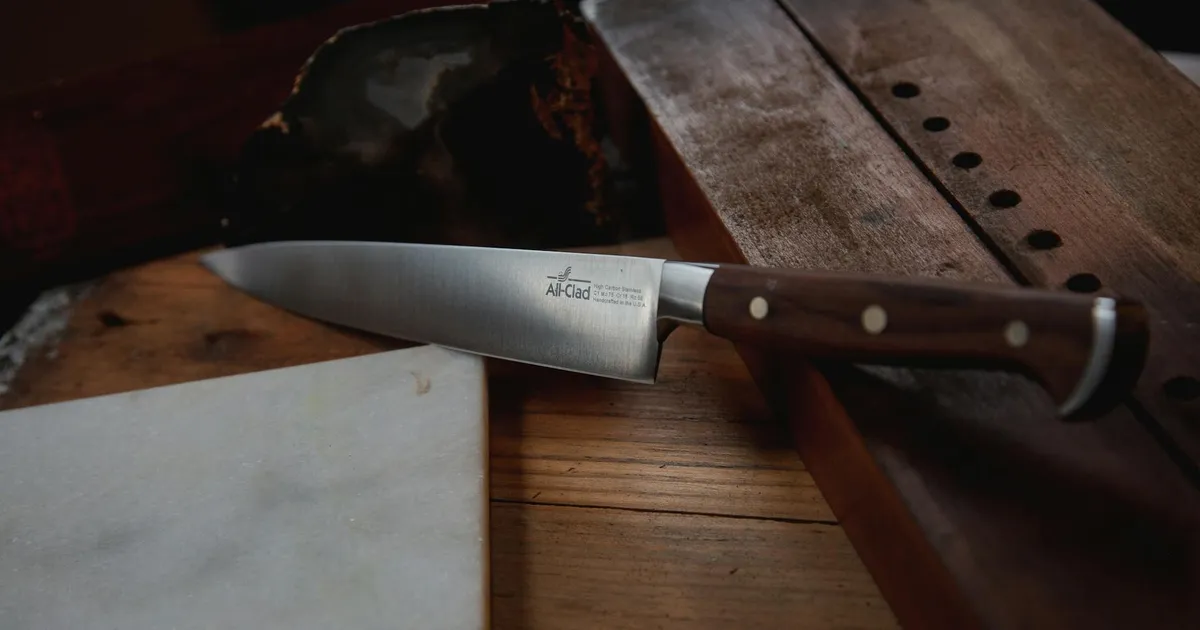
Focus on sets containing the most used knives: a chef’s knife, a paring knife, and a serrated utility knife. A chef’s knife handles 80% of kitchen tasks, typically 8-10 inches long. A paring knife, 3-4 inches, is for precise work. A serrated knife, 5-7 inches, cuts bread and tomatoes cleanly.
Step 5: Consider Set Size and Storage
Choose a set size that matches your kitchen space and actual usage. Larger sets often include specialty knives you might rarely use. A knife block provides safe counter storage, while magnetic strips save space.
Step 6: Set a Realistic Budget
Knife sets range widely in price, from under $50 to several hundred dollars. A higher price often indicates better materials and craftsmanship. Allocate your budget to get the best quality for the knives you will use most often.
Tips and Best Practices
- Test the knife’s balance and feel before purchasing.
- Look for sets with a strong warranty, indicating manufacturer confidence.
- Consider a smaller, high-quality set over a large, lower-quality one.
- Research specific brands known for durable, sharp knives.
- Plan for proper knife care, including hand washing and regular sharpening.
Common Mistakes
- Buying a large set with many unused knives.
- Ignoring handle comfort, leading to hand fatigue.
- Prioritizing aesthetics over blade material and construction.
- Neglecting to budget for a knife sharpener.
FAQ
Q: What is the most important knife in a set? The chef’s knife is the most important, performing a majority of kitchen cutting tasks. It is typically 8-10 inches long.
Q: Are expensive knife sets always better? Expensive sets often feature superior materials and construction, leading to better performance and durability. However, a mid-range set can still offer excellent value for most home cooks.
Q: How many knives do I really need in a set? Most home cooks need 3-5 essential knives: a chef’s knife, a paring knife, a serrated utility knife, and possibly a bread knife. Larger sets often include specialty knives that see infrequent use.
Q: Should I choose a Japanese or German knife set? Japanese knives are known for their sharper, thinner blades and precise cuts. German knives are typically heavier, more durable, and designed for robust work. Your cooking style determines the best fit.
- knife
- knife-sets